Why is it that humans express their emotions so strangely? They mean to let out a tear but accidentally let out a laugh. They mean to say "I love you" but end up saying nothing at all. They mean to apologize but land another snarky remark.

As I'm writing this on my flight back home after Graduation, I realize that I’m a victim of my own variation of this phenomenon. Doctors call it a globus sensation, though I've never found much comfort in the clinical framing. It's that feeling when your throat tightens around something invisible and your voice strains not to break, like your body is trying to hold something in that your mind hasn't yet given it permission to feel.
When I got to the MARTA station today I thought I'd be celebrating my last $2.50 train ride. Instead, I found myself in another one of those awkwardly human situations. Haris, my roommate, helped carry my bags a couple blocks down the street as I left for the airport. We had countless late nights where we'd talked about exactly this moment. How strange it would be when one of us finally walked out of the apartment for the last time. In retrospect, I wish we'd gotten around to figuring out what we'd actually say when it arrived. Three years of living together, and neither of us could manage more than a few syllables. That feeling returned.
I remember the last time I felt it. August 9th, 2023. My parents and I were standing outside Hopkins, my freshman dorm, waiting for their Uber to arrive but quietly hoping it wouldn't. My mom had spent the last hour running through a checklist of things I already knew because reciting them was easier than admitting she was scared to leave me alone. My dad stood three feet away with a smile that didn't quite hold, the one he wears when his pride is just barely overpowering everything else. I wanted to cry. Even one tear would've been enough, just to show them how terrified I actually was, but my body had other plans. The car came and went, and just like that, I was 2,453 miles from the the only version of myself I recognized
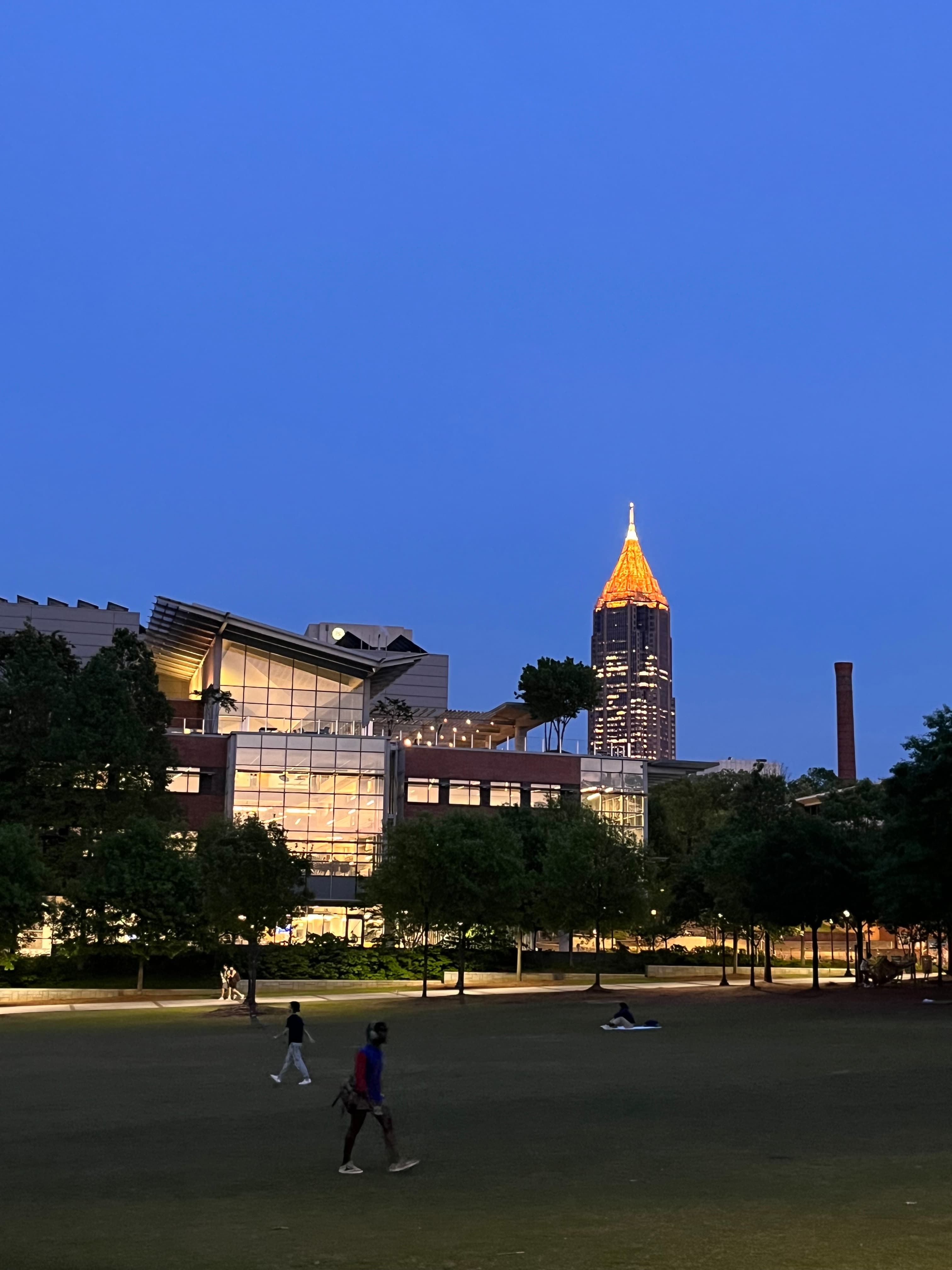
Ninety days feels like it should be enough but I suppose that's the cruelty of assimilation. The expectation of comfort arrives well before the comfort itself does, and you're left stranded between two versions of normal, suspended in the cognitive dissonance of a life that almost fits. Atlanta was becoming legible to me in small, sly ways. Acquaintances I could nod to in passing. The humidity that had stopped being foreign. A spot on the 6th floor of the library I'd quietly claimed as mine. But fluency in one place, I was learning, comes at the cost of another. The more Atlanta settled into my bones, the more I felt the Bay Area loosening from them. I'd only snap back into reality on the flights when the pilot would say:
"For those of you visiting, have a nice visit. And for those who are lucky enough to call San Francisco home, welcome back."
The Welsh have a word for it: hiraeth. It resists clean translation, which is perhaps the point. It is the ache of longing for a home you cannot fully return to. Not because it's gone, but because you are. Hiraeth knew the difference between going home and going back.
After a discrete mathematics exam on my birthday that year, I did what I've always done growing up. I found the nearest temple and made my way there. It's a ritual I've never had to rationalize. Showing up, quietly, to say thank you for a heart that keeps beating and a mind that craves exploration. I wasn't expecting much from it. But standing there in that room, something deeper settled. I went in to express gratitude and walked out feeling closer to my past self than I had in months. It wasn't the building itself. It was the realization that the things I'd worried about losing, my traditions, my faith, the shape of who I was, lived inside me. I'd been carrying them the whole time. The comfort of knowing I'd still be me every time March 7th came around dissolved one of my more stubborn fears.

When I got back to my apartment, I found a box of donuts (my favorite dessert) and flowers sitting outside my door. My family, even from across the country, had found a way to show up for me. I recall standing there for a moment longer than I needed to before heading inside to get ready for dinner.
I don't exactly know when I planted the seeds, yet dozens of friends had carved time out of their weeks to be there that Thursday night. I sat down and tried to trace back how this had happened. I suppose in the late nights and shared meals and small moments I hadn't thought to catalog, something had been quietly growing. Sahil was mid-punchline on a joke only a couple of us at the table would understand. Akshar had already slipped away to ask the waiter for a cake without so much as glancing at me first. Somewhere in the middle of it all, the weight I'd been carrying loosened a notch. I'd been building a life here all along. I just hadn't taken a second to stop to notice.
Once I stopped mourning a past life, I let myself be present enough to see the potential of what lay in front of me. Georgia Tech came to feel less like a place and more like a living organism. The diploma will tell you otherwise, and buildings have addresses, and tuition has line items, but the longer I stayed, the more I felt a strange economy at work. What you gave it, it gave back. Not always immediately, and never in the form you expected, but always in a currency it had been quietly keeping track of. For the time and attention I gave it, for every uncomfortable room I'd walked into, what came back resisted easy accounting. I walked away with mentors who would never claim the title, friendships that caught me completely off guard, and a discovery of the problems I wanted to spend my career solving. None of this came from any single experience I could pinpoint. It took three years of accumulating side quests to get there.
Atlanta broke me, more times than I'd like to admit. I'd assumed coming in that the hard part would be the coursework.The coursework was challenging, sure, but the real obstacle was learning, over and over, that no amount of effort guarantees the outcomes you're searching for. Some days I'd put in everything I had and still come up short. I'd fail in small, quiet ways nobody saw, and large, public ways I couldn't hide from if I tried. Each time Tech knocked me down, though, it raised me back up, and almost always through the same mechanism. The people it gave me.
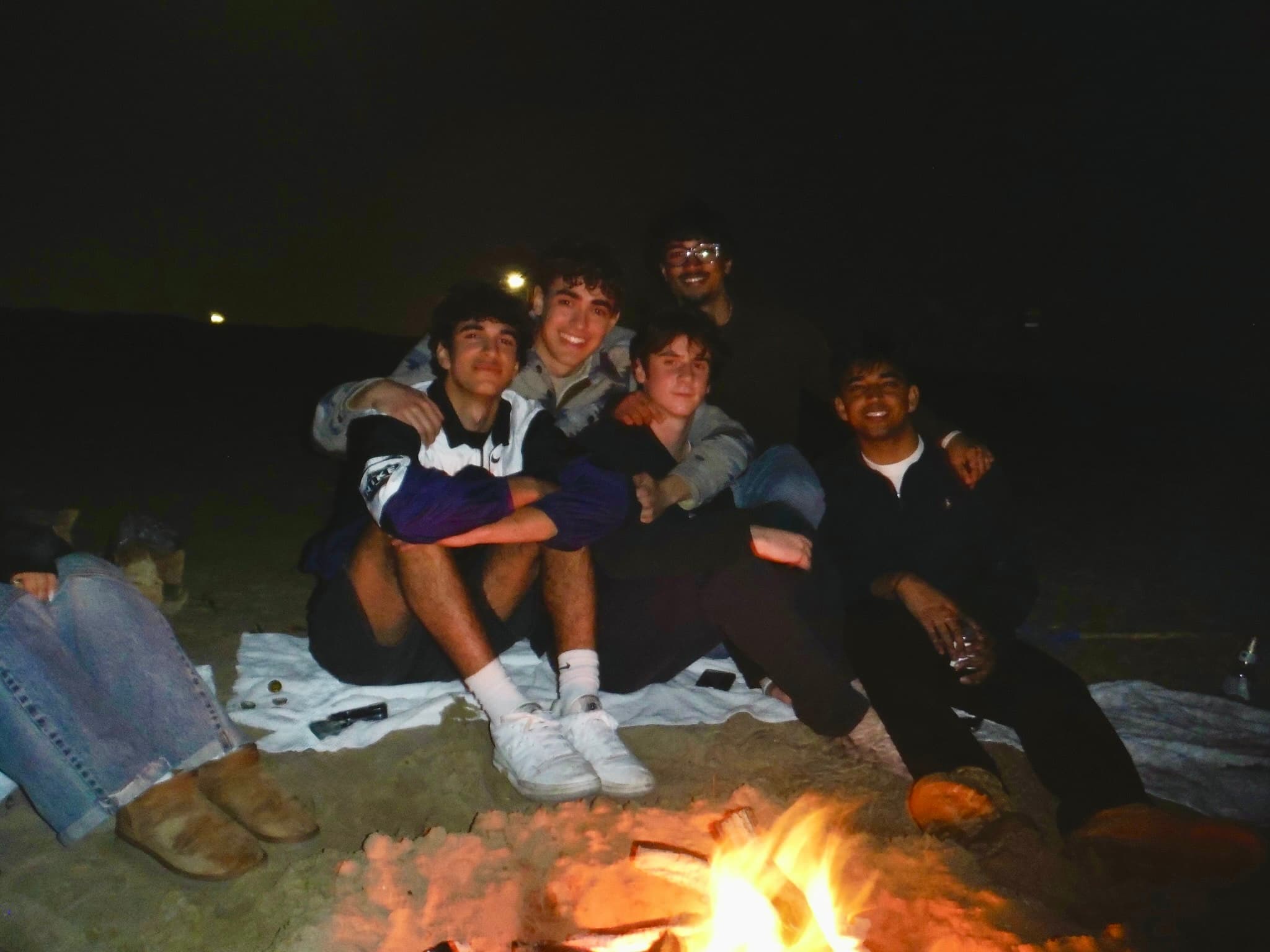
These individuals expanded my intellectual curiosity in ways no syllabus ever could. They pulled me into research at odd hours and built things with me through the night, asking sharper questions than I'd have thought to ask myself. Being around them made the world feel larger and more fascinating rather than overwhelming. They made me take care of my body, especially on the days it was easy not to, dragging me to the gym and noticing, with embarrassing accuracy, when I'd been eating Chipotle too many days in a row.
More than anything, they taught me how to look out for myself when no one was watching. They reminded me at my lowest moments how important it is to laugh, and how unconditionally I was loved by the people who mattered. I know some of them will read this and think I'm exaggerating how sentimental they've made me feel, but somewhere between the FIFA games, I learned more from these people than any podcast could have taught me.
My dad and I used to joke that he was paying $35,000 a year for a piece of paper. We both half-believed it. But somewhere above the clouds today, I'm realizing the paper was always a red herring. My regalia is zipped into the carry-on above my seat, while the possessions I'm holding tight are a laptop full of code I wouldn't have known how to write three years ago, and memories of people who quietly rewired the man I was becoming.
When that feeling came back at the MARTA station, I didn't feel fear or isolation or doubt or confusion. Today, it's all flipped. I am the one leaving. And I feel proud that the home I'm saying goodbye to is one I constructed, not from a plan, not on purpose, just slowly, by showing up over and over until it was mine. The grief is real. I'm not going to dress it up. But this specific grief is something people toil years to earn. You only feel it when you've let go of something worth losing.
Though I had no way of knowing this at eighteen, I recognize as I'm leaving Georgia Tech that no matter where I find myself, there's always a moment to be lived. A moment to show up as a friend. A moment to stay up solving enigmas no one else will. A moment to laugh until your face hurts. A moment to be quietly grateful for a heart that keeps beating. And I know that through a few hundred, or even a few thousand of these moments, I'll realize on a random Thursday evening that, once again, I've built myself a new home.
It's in those fleeting seconds that I'll look in the rearview mirror and commemorate the people who taught me how.
Om